Table Of Content
TES is one of four instruments studying the atmosphere from an Earth-orbiting satellite called Aura. But in the atmosphere close to Earth's surface where we live, ozone adds to smog and is hard on plants and animals, including us. Because the greenhouse effect is a natural process, it affects other bodies in the solar system, too. And, in some cases, that provides a warning about how things can go awry. A perfect example of this is Venus, which is roughly the same size as Earth and not that much closer to the sun. Although this future may seem far off, climate change is already worsening wildfires in the western United States, intensifying cyclones in Mozambique, and reducing crop production in Vietnam.
What reduces the greenhouse effect on Earth?
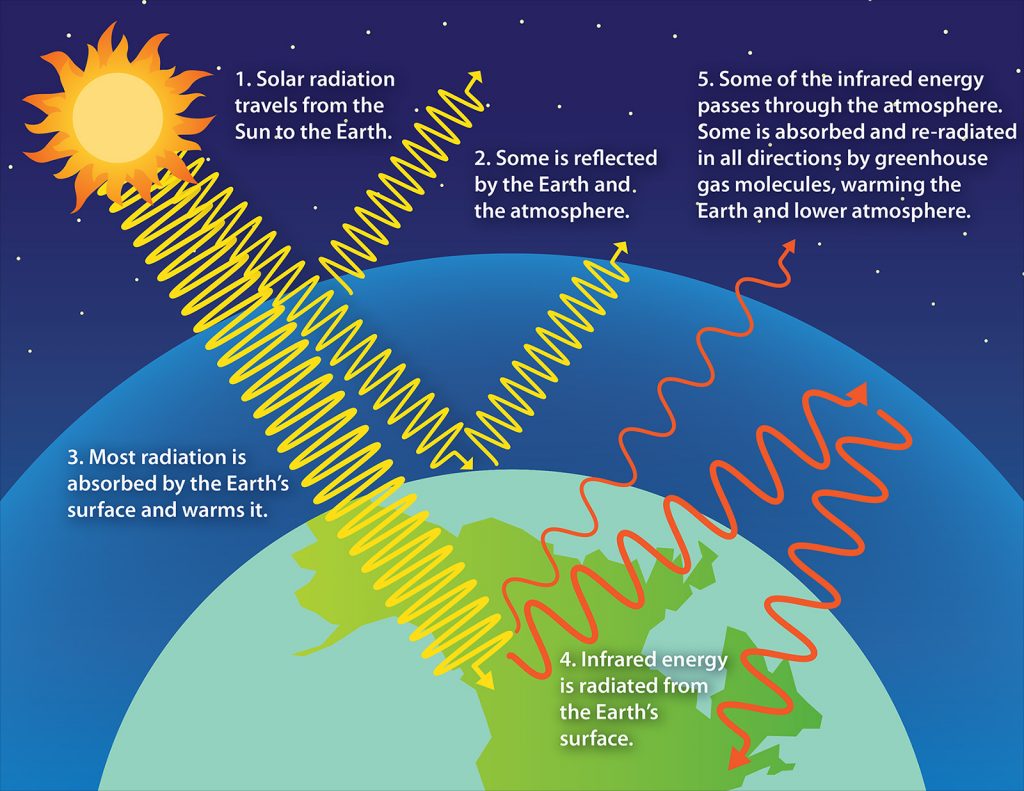
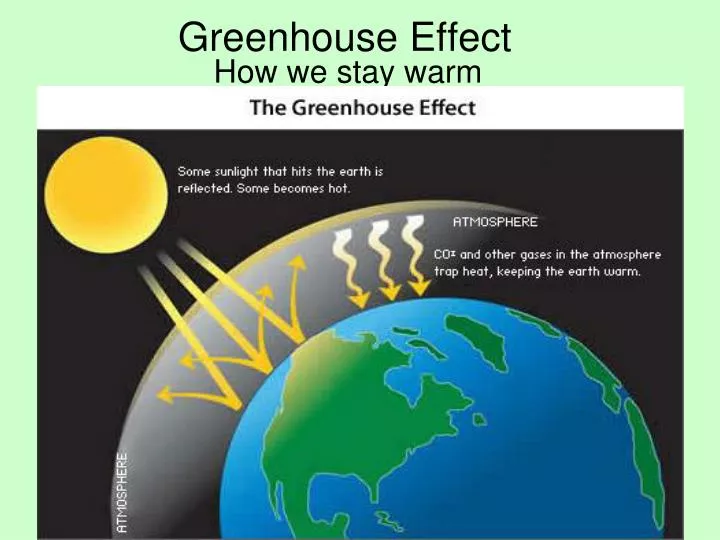
The increased number of factories and automobiles increases the amount of these gases in the atmosphere. The greenhouse gases never let the radiations escape from the earth and increase the surface temperature of the earth. Greenhouse gases such as methane, carbon dioxide, nitrous oxide, and water vapor significantly affect the amount of energy in the Earth system, even though they make up a tiny percentage of Earth’s atmosphere. Solar radiation that passes through the atmosphere and reaches Earth’s surface is either reflected or absorbed. Reflected sunlight doesn’t add any heat to the Earth system because this energy bounces back into space. Forestry and other land-use practices can offset some of these greenhouse gas emissions.
Greenhouse gases: Causes, sources and environmental effects
That report said the California Air Resources Board lacked “a clear strategy” for meeting the 2030 goal. During the 20,000-year period before the Industrial Revolution, atmospheric CO2 fluctuated between about 180 parts per million (ppm) during ice ages and 280 ppm during interglacial warm periods. However, since the beginning of the Industrial Revolution in the 1750s, the amount of CO2 has risen nearly 50%, according to NASA’s Global Climate Change portal. The amount of CO2 emitted by the cement industry is more than 900 kg of CO2 for every 1000 kg of cement produced.
Outgoing longwave radiation
International report confirms record-high greenhouse gases, global sea levels in 2022 - National Oceanic and Atmospheric Administration
International report confirms record-high greenhouse gases, global sea levels in 2022.
Posted: Wed, 06 Sep 2023 07:00:00 GMT [source]
Thus, the Earth's greenhouse effect may be measured as a temperature change of 33 °C (59 °F). All objects with a temperature above absolute zero emit thermal radiation. The wavelengths of thermal radiation emitted by the Sun and Earth differ because their surface temperatures are different. The Sun has a surface temperature of 5,500 °C (9,900 °F), so it emits most of its energy as shortwave radiation in near-infrared and visible wavelengths (as sunlight).
Sensor network shows EVs are reducing CO2 emissions in the Bay Area. Is it enough?
This global warming could alter Earth’s climates and thereby produce new patterns and extremes of drought and rainfall and possibly disrupt food production in certain regions. Today, concentrations of human-caused greenhouse gases in the atmosphere are higher than ever and the planet is heating up. Between preindustrial times and now, says the IPCC, the earth’s average temperature has increased almost 2 degrees Fahrenheit (1.1 degree Celsius), with two-thirds of that warming occurring in the last handful of decades alone. Atmospheric levels of carbon dioxide—the most dangerous and prevalent greenhouse gas—are at the highest levels ever recorded. Greenhouse gas levels are so high primarily because humans have released them into the air by burning fossil fuels. The gases absorb solar energy and keep heat close to Earth's surface, rather than letting it escape into space.
Where do greenhouse gases come from?
Water vapor is actually the world's most abundant greenhouse gas, but it is not tracked the same way as other greenhouse gases because it is not directly emitted by human activity and its effects are not well understood. Similarly, ground-level or tropospheric ozone (not to be confused with the protective stratospheric ozone layer higher up) is not emitted directly but emerges from complex reactions among pollutants in the air. Greenhouse effect, a warming of Earth’s surface and troposphere (the lowest layer of the atmosphere) caused by the presence of water vapour, carbon dioxide, methane, and certain other gases in the air. Of those gases, known as greenhouse gases, water vapour has the largest effect. Methane is about 21 times more efficient at absorbing radiation than CO2, giving it a higher GWP rating, even though it stays in the atmosphere for only about 12 years, according to the United Nations Framework Convention on Climate Change (UNFCCC).
Urge President Biden and Congress to make equitable climate action a top priority in 2024
But higher concentrations of greenhouse gases, and carbon dioxide (CO2) in particular, are causing extra heat to be trapped and average global temperatures to rise. For most of the past 800,000 years—much longer than human civilization has existed—the concentration of CO2 in our atmosphere was roughly between 200 and 280 parts per million. (In other words, there were 200 to 280 molecules of the gases per million molecules of air.) But in the past century, that concentration has jumped. In 2013, driven up largely by the burning of fossil fuels and deforestation, CO2 in the earth’s atmosphere surpassed 400 parts per million—a concentration not seen on the planet for millions of years. As of 2023, it has reached more than 420 parts per million, which is 50 percent higher than preindustrial levels.
How the runaway greenhouse gas effect can destroy a planet's habitability — including Earth's - Space.com
How the runaway greenhouse gas effect can destroy a planet's habitability — including Earth's.
Posted: Tue, 19 Dec 2023 08:00:00 GMT [source]
Overall, this rate of accumulation has been linear (that is, uniform over time). However, certain current sinks, such as the oceans, could become sources in the future. This may lead to a situation in which the concentration of atmospheric CO2 builds at an exponential rate (that is, at a rate of increase that is also increasing over time). We must protect our carbon-storing forests and reduce food waste and the emissions that go with it. We should be doubling down on reducing emissions from dirty power plants and cars and trucks.
What are greenhouse gas emissions?
If carbon dioxide were removed, the terrestrial greenhouse effect would collapse, and Earth's surface temperature would drop significantly, by approximately 33°C (59°F). One cannot predict the relative sizes of the greenhouse effects on different bodies simply by comparing the amount of greenhouse gases in their atmospheres. This is because factors other than the quantity of these gases also play a role in determining the size of the greenhouse effect.

Higher concentrations of atmospheric CH4 are also caused by changes in land and wetland use, pipeline losses and landfill emissions. At our current pace, the world will blow its entire “carbon budget” by around 2030. The exchange of incoming and outgoing radiation that warms the Earth is often referred to as the greenhouse effect because a greenhouse works in much the same way. Earth is constantly bombarded with enormous amounts of radiation, primarily from the sun.
Climate change impacts where we can live, how we work, how we grow our food—especially if we live or work in frontline communities. Warmer temperatures mean more insects that spread diseases like dengue fever—and heat waves are getting hotter and becoming more lethal to humans. Climate change-driven droughts and floods also pose huge risks to agriculture.
We know that greenhouse gases provide a warming effect to Earth’s surface, but aerosol pollution in the atmosphere can counteract this warming effect. For example, sulphate aerosols from fossil fuel combustion exert a cooling influence by reducing the amount of sunlight that reaches the Earth. By increasing the concentration of greenhouse gases in the atmosphere, we’re amplifying the planet’s natural greenhouse effect and turning up the dial on global warming. If there were not any greenhouse gases in the atmosphere, all that heat would pass directly back into space.
Today, scientists have no doubts about climate change and Californians see the impacts all around them. The assessment laid the groundwork for what has arguably become the country’s most ambitious effort to address global warming. Get Boiling Point, our newsletter exploring climate change, energy and the environment, and become part of the conversation — and the solution.
The basics of the phenomenon were worked out well over a century ago by Swedish physicist and chemist Svante Arrhenius, in 1896. His paper, published in the Philosophical Magazine and Journal of Science, was the first to quantify the contribution of carbon dioxide to what scientists now call the "greenhouse effect." Ozone Layer protects the earth from harmful ultraviolet rays from the sun.




No comments:
Post a Comment